CaloTrack :– Visual Food Logging & Calorie Tracking Made Simple
CaloTrack :– Visual Food Logging & Calorie Tracking Made Simple
CaloTrack :– Visual Food Logging & Calorie Tracking Made Simple
2024
2024
Web 2
Web 2
Health tech
Health tech
Socio-Finance
Socio-Finance
role
role
role
Product Designer
Product Designer
Product Designer
platform
platform
platform
IOS and Andriod
IOS and Andriod
IOS and Andriod
duration
duration
duration
2 Months
2 Months
2 Months
link
link
link
Calo Track
Calo Track
Calo Track
Introduction
Introduction
Introduction
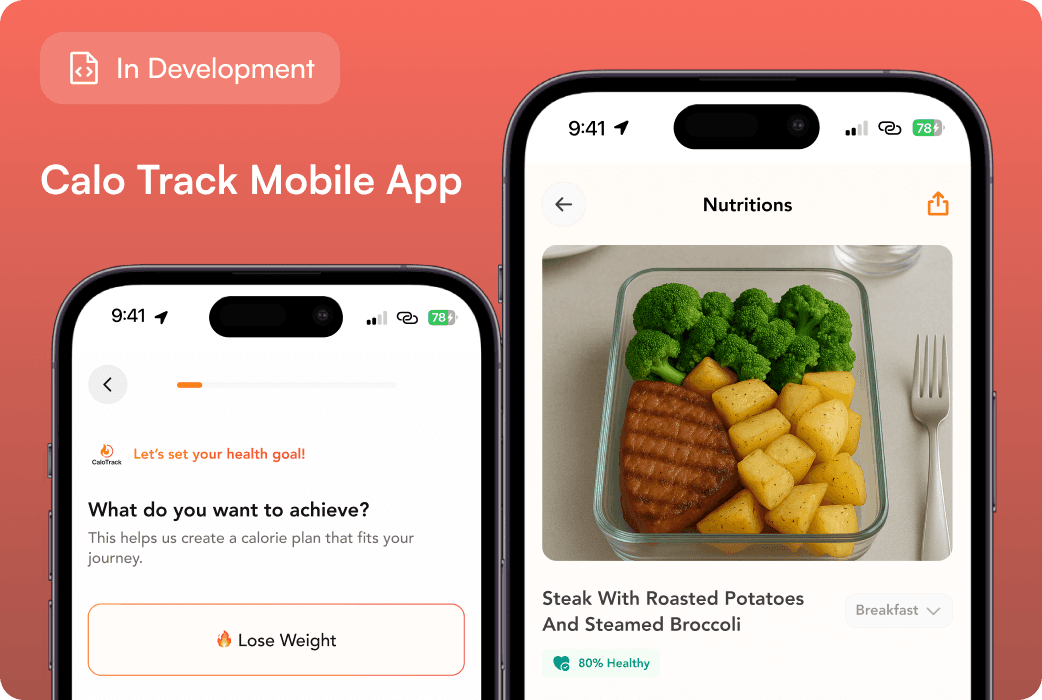
CaloTrack is a mobile calorie tracking app that uses AI to analyze meal photos, helping users log food intake without manually entering items. With CaloTrack, users can track their calories visually, set specific health goals (weight loss, gain, or maintenance), and monitor progress through detailed analytics. This case study explores the process of designing an intuitive and engaging experience for everyday users seeking a healthier lifestyle.
CaloTrack is a mobile calorie tracking app that uses AI to analyze meal photos, helping users log food intake without manually entering items. With CaloTrack, users can track their calories visually, set specific health goals (weight loss, gain, or maintenance), and monitor progress through detailed analytics. This case study explores the process of designing an intuitive and engaging experience for everyday users seeking a healthier lifestyle.
CaloTrack is a mobile calorie tracking app that uses AI to analyze meal photos, helping users log food intake without manually entering items. With CaloTrack, users can track their calories visually, set specific health goals (weight loss, gain, or maintenance), and monitor progress through detailed analytics. This case study explores the process of designing an intuitive and engaging experience for everyday users seeking a healthier lifestyle.
Project Background and Context
Project Background and Context
Project Background and Context
With the rise of fitness consciousness globally, calorie-tracking apps like MyFitnessPal and Lifesum gained traction. However, many of these platforms rely heavily on manual input, making the process tedious and unsustainable for many users.
CaloTrack was conceived to simplify the user experience by allowing people to "snap their meal and track their health" through automated calorie recognition, activity monitoring, and personalized progress tracking.
I joined the project at its early stage, tasked with leading the product design and delivering a seamless and intuitive MVP (Minimum Viable Product).
With the rise of fitness consciousness globally, calorie-tracking apps like MyFitnessPal and Lifesum gained traction. However, many of these platforms rely heavily on manual input, making the process tedious and unsustainable for many users.
CaloTrack was conceived to simplify the user experience by allowing people to "snap their meal and track their health" through automated calorie recognition, activity monitoring, and personalized progress tracking.
I joined the project at its early stage, tasked with leading the product design and delivering a seamless and intuitive MVP (Minimum Viable Product).
With the rise of fitness consciousness globally, calorie-tracking apps like MyFitnessPal and Lifesum gained traction. However, many of these platforms rely heavily on manual input, making the process tedious and unsustainable for many users.
CaloTrack was conceived to simplify the user experience by allowing people to "snap their meal and track their health" through automated calorie recognition, activity monitoring, and personalized progress tracking.
I joined the project at its early stage, tasked with leading the product design and delivering a seamless and intuitive MVP (Minimum Viable Product).
Core Problem
Core Problem
Core Problem
Manual food logging is time-consuming and discouraging for most users.
Traditional calorie trackers overwhelm users with long food lists and nutritional breakdowns. This leads to high drop-off rates and inconsistent usage, especially among beginners.
We needed to build a solution that would:
Make logging meals fast and frictionless.
Give users visual and motivational feedback.
Help them easily stay on track with their personal goals.
Manual food logging is time-consuming and discouraging for most users.
Traditional calorie trackers overwhelm users with long food lists and nutritional breakdowns. This leads to high drop-off rates and inconsistent usage, especially among beginners.
We needed to build a solution that would:
Make logging meals fast and frictionless.
Give users visual and motivational feedback.
Help them easily stay on track with their personal goals.
Manual food logging is time-consuming and discouraging for most users.
Traditional calorie trackers overwhelm users with long food lists and nutritional breakdowns. This leads to high drop-off rates and inconsistent usage, especially among beginners.
We needed to build a solution that would:
Make logging meals fast and frictionless.
Give users visual and motivational feedback.
Help them easily stay on track with their personal goals.
Who I'm Designing For
Who I'm Designing For
Who I'm Designing For
Our target users were:
Fitness beginners who want to start tracking food intake but don’t have deep nutritional knowledge.
Busy professionals who want a simple way to track calories without spending time inputting each meal.
People with specific weight goals — including those trying to gain, lose, or maintain weight.
These personas were created after user interviews and surveys with individuals who had previously used fitness apps but struggled to stay consistent.
Our target users were:
Fitness beginners who want to start tracking food intake but don’t have deep nutritional knowledge.
Busy professionals who want a simple way to track calories without spending time inputting each meal.
People with specific weight goals — including those trying to gain, lose, or maintain weight.
These personas were created after user interviews and surveys with individuals who had previously used fitness apps but struggled to stay consistent.
Our target users were:
Fitness beginners who want to start tracking food intake but don’t have deep nutritional knowledge.
Busy professionals who want a simple way to track calories without spending time inputting each meal.
People with specific weight goals — including those trying to gain, lose, or maintain weight.
These personas were created after user interviews and surveys with individuals who had previously used fitness apps but struggled to stay consistent.
PainPoint
PainPoint
PainPoint
From user research and feedback analysis, we identified key pain points:
Time-consuming logging: Users hated typing in meals and choosing from large databases.
Inconsistent tracking: Many forgot to log meals regularly due to the hassle.
Lack of motivation: Seeing numbers without context or goals made tracking feel purposeless.
No personalization: Generic apps didn’t adapt to different fitness goals or eating styles.
From user research and feedback analysis, we identified key pain points:
Time-consuming logging: Users hated typing in meals and choosing from large databases.
Inconsistent tracking: Many forgot to log meals regularly due to the hassle.
Lack of motivation: Seeing numbers without context or goals made tracking feel purposeless.
No personalization: Generic apps didn’t adapt to different fitness goals or eating styles.
From user research and feedback analysis, we identified key pain points:
Time-consuming logging: Users hated typing in meals and choosing from large databases.
Inconsistent tracking: Many forgot to log meals regularly due to the hassle.
Lack of motivation: Seeing numbers without context or goals made tracking feel purposeless.
No personalization: Generic apps didn’t adapt to different fitness goals or eating styles.
Solution
Solution
Solution
CaloTrack was designed with the idea that tracking calories should be as easy as snapping a photo.
Key solutions implemented:
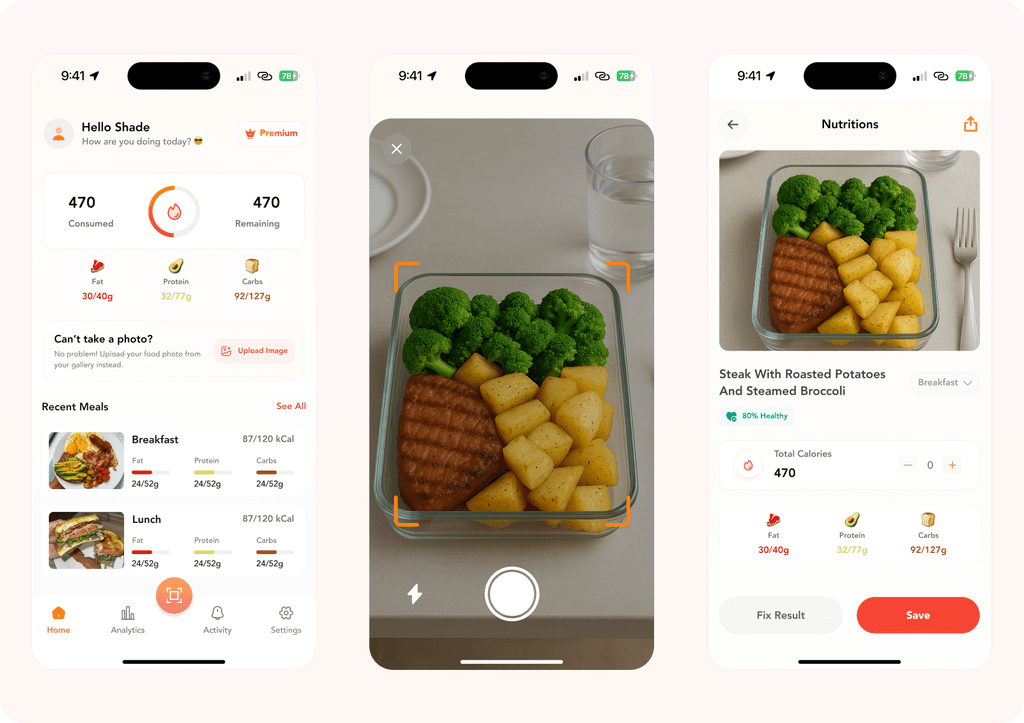
AI-Powered Meal Recognition: Users take a photo of their meal, and the app detects ingredients and estimates calorie content.
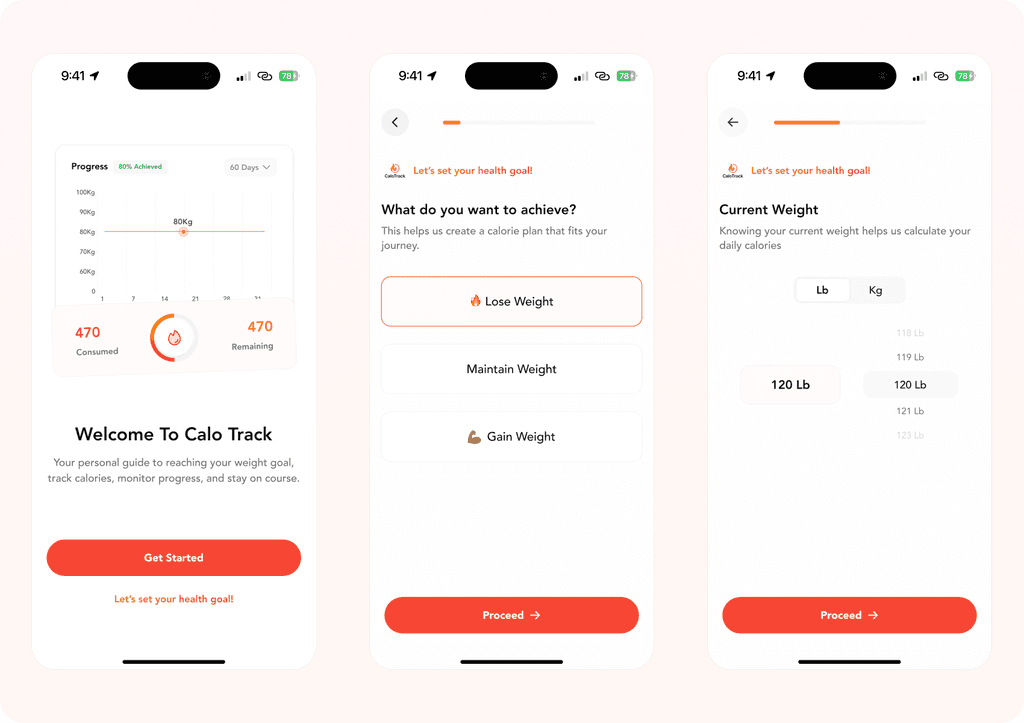
Goal-Oriented Tracking: Users select a fitness goal (gain, lose, maintain) and the app auto-calculates daily calorie limits.
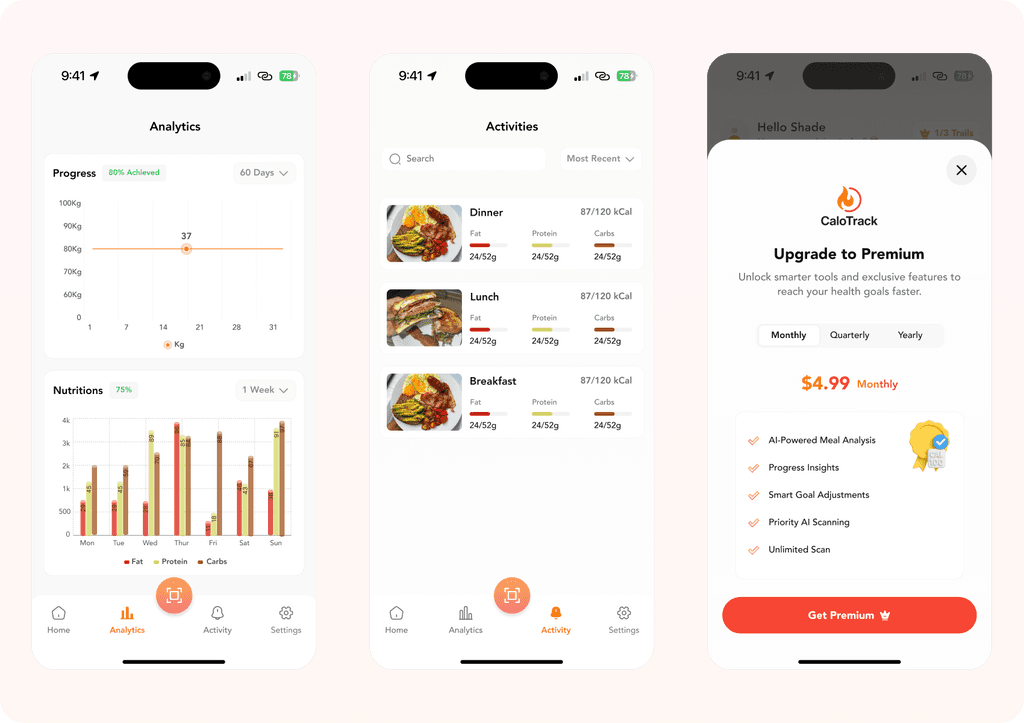
Visual Progress Analysis: Charts and visuals make it easy to track progress and food history.
Daily Reminders & Streaks: Gamification elements help keep users engaged over time.
CaloTrack was designed with the idea that tracking calories should be as easy as snapping a photo.
Key solutions implemented:
AI-Powered Meal Recognition: Users take a photo of their meal, and the app detects ingredients and estimates calorie content.
Goal-Oriented Tracking: Users select a fitness goal (gain, lose, maintain) and the app auto-calculates daily calorie limits.
Visual Progress Analysis: Charts and visuals make it easy to track progress and food history.
Daily Reminders & Streaks: Gamification elements help keep users engaged over time.
CaloTrack was designed with the idea that tracking calories should be as easy as snapping a photo.
Key solutions implemented:
AI-Powered Meal Recognition: Users take a photo of their meal, and the app detects ingredients and estimates calorie content.
Goal-Oriented Tracking: Users select a fitness goal (gain, lose, maintain) and the app auto-calculates daily calorie limits.
Visual Progress Analysis: Charts and visuals make it easy to track progress and food history.
Daily Reminders & Streaks: Gamification elements help keep users engaged over time.
Features
Features
Features
Here’s a breakdown of the features I designed:
Snap & Track
Take a picture of your meal.
AI detects food items and calculates calorie count.
Users can adjust manually if necessary.Goal Setting
Choose a target: weight loss, gain, or maintenance.
App creates a personalized daily calorie goal.
Weekly and monthly tracking to monitor goal alignment.Calorie Dashboard
Displays daily intake, remaining calories, and macros.
Progress graphs to show calorie trends and goal progress.
Track habits like most eaten foods and best streaks.Activity Insights
Connect with health data (steps, workouts).
Show calories burned and adjust intake recommendations.
Encouraging messages and rewards for staying active.Smart Notifications
Meal reminders, hydration prompts, and goal nudges.
Motivational content when goals are hit.
Here’s a breakdown of the features I designed:
Snap & Track
Take a picture of your meal.
AI detects food items and calculates calorie count.
Users can adjust manually if necessary.Goal Setting
Choose a target: weight loss, gain, or maintenance.
App creates a personalized daily calorie goal.
Weekly and monthly tracking to monitor goal alignment.Calorie Dashboard
Displays daily intake, remaining calories, and macros.
Progress graphs to show calorie trends and goal progress.
Track habits like most eaten foods and best streaks.Activity Insights
Connect with health data (steps, workouts).
Show calories burned and adjust intake recommendations.
Encouraging messages and rewards for staying active.Smart Notifications
Meal reminders, hydration prompts, and goal nudges.
Motivational content when goals are hit.
Here’s a breakdown of the features I designed:
Snap & Track
Take a picture of your meal.
AI detects food items and calculates calorie count.
Users can adjust manually if necessary.Goal Setting
Choose a target: weight loss, gain, or maintenance.
App creates a personalized daily calorie goal.
Weekly and monthly tracking to monitor goal alignment.Calorie Dashboard
Displays daily intake, remaining calories, and macros.
Progress graphs to show calorie trends and goal progress.
Track habits like most eaten foods and best streaks.Activity Insights
Connect with health data (steps, workouts).
Show calories burned and adjust intake recommendations.
Encouraging messages and rewards for staying active.Smart Notifications
Meal reminders, hydration prompts, and goal nudges.
Motivational content when goals are hit.
Conclusion
Conclusion
Conclusion
Designing CaloTrack has been an insightful journey focused on reducing friction in how users track their calorie intake. By prioritizing a photo-based logging experience and intuitive goal setting, we aimed to make calorie tracking more natural and engaging—especially for beginners and busy users.
While the app is currently in development, the design process has already validated key assumptions through user interviews, wireframe testing, and early feedback sessions. Users expressed strong interest in the visual food recognition feature and appreciated the clarity of the dashboard and progress tracking tools.
As we move toward launching the MVP, we remain focused on refining the user experience and ensuring that CaloTrack becomes a reliable, easy-to-use tool for anyone looking to manage their health without the usual hassle of traditional tracking apps.
Designing CaloTrack has been an insightful journey focused on reducing friction in how users track their calorie intake. By prioritizing a photo-based logging experience and intuitive goal setting, we aimed to make calorie tracking more natural and engaging—especially for beginners and busy users.
While the app is currently in development, the design process has already validated key assumptions through user interviews, wireframe testing, and early feedback sessions. Users expressed strong interest in the visual food recognition feature and appreciated the clarity of the dashboard and progress tracking tools.
As we move toward launching the MVP, we remain focused on refining the user experience and ensuring that CaloTrack becomes a reliable, easy-to-use tool for anyone looking to manage their health without the usual hassle of traditional tracking apps.
Designing CaloTrack has been an insightful journey focused on reducing friction in how users track their calorie intake. By prioritizing a photo-based logging experience and intuitive goal setting, we aimed to make calorie tracking more natural and engaging—especially for beginners and busy users.
While the app is currently in development, the design process has already validated key assumptions through user interviews, wireframe testing, and early feedback sessions. Users expressed strong interest in the visual food recognition feature and appreciated the clarity of the dashboard and progress tracking tools.
As we move toward launching the MVP, we remain focused on refining the user experience and ensuring that CaloTrack becomes a reliable, easy-to-use tool for anyone looking to manage their health without the usual hassle of traditional tracking apps.
Next Read
Next Read
Next Read
Dive into another piece that explores design, process, or the thinking behind the pixels.
Dive into another piece that explores design, process, or the thinking behind the pixels.
Dive into another piece that explores design, process, or the thinking behind the pixels.
2024
2024
2024
Web 2
Web 2
Web 2
Fintech
Fintech
Fintech
Bitstac
Bitstac
Bitstac
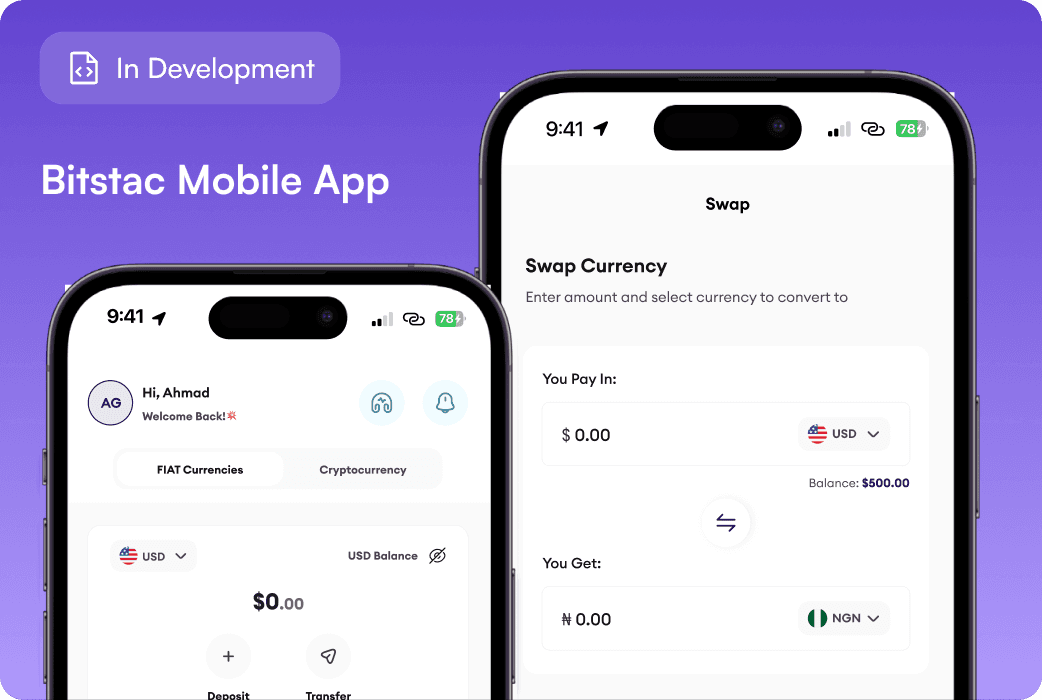
Bitstac connects Africa to the world with a seamless financial experience—supporting cross-border payments, stablecoin wallets, local and mobile money funding, and virtual cards
Bitstac connects Africa to the world with a seamless financial experience—supporting cross-border payments, stablecoin wallets, local and mobile money funding, and virtual cards
Bitstac connects Africa to the world with a seamless financial experience—supporting cross-border payments, stablecoin wallets, local and mobile money funding, and virtual cards
2025
2025
2025
Web 2
Web 2
Web 2
Social Platform + Fintech
Social Platform + Fintech
Social Platform + Fintech
Pumpkin Chat
Pumpkin Chat
Pumpkin Chat
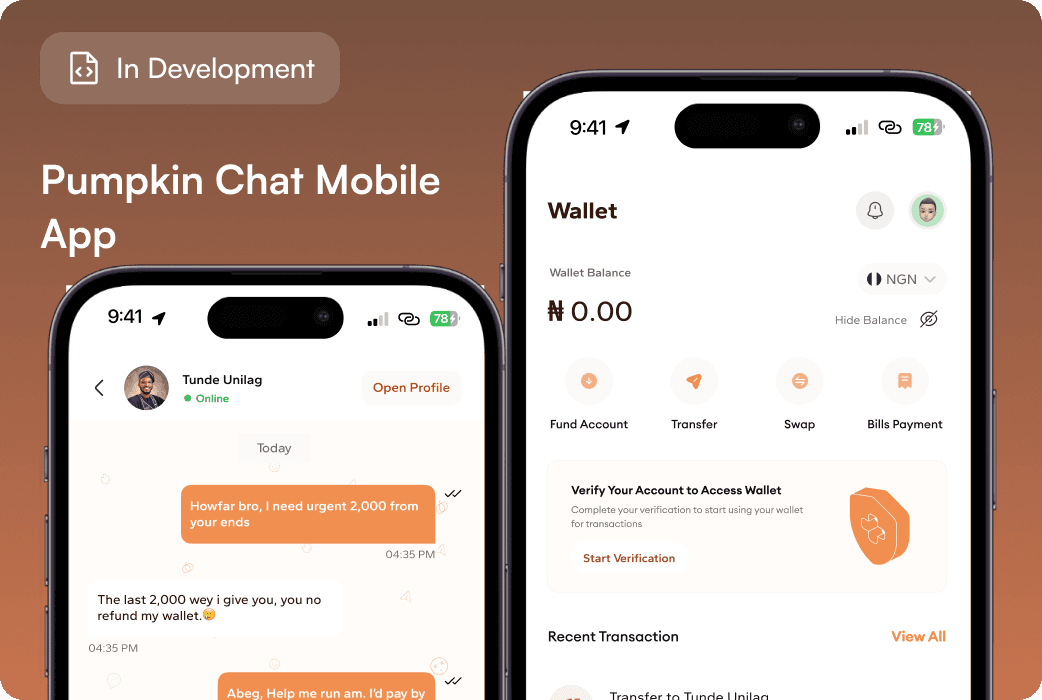
Pumpkin Chat is a social-meets-fintech app that lets you stay connected with friends while sending money, paying bills, and managing virtual cards—all without leaving the chat.
Pumpkin Chat is a social-meets-fintech app that lets you stay connected with friends while sending money, paying bills, and managing virtual cards—all without leaving the chat.
Pumpkin Chat is a social-meets-fintech app that lets you stay connected with friends while sending money, paying bills, and managing virtual cards—all without leaving the chat.

Work with me, Let’s Create Magic
Work with me, Let’s Create Magic
Work with me, Let’s Create Magic
Moh Ahmad Garba
Product Designer - UI/UX
Moh Ahmad Garba
Product Designer - UI/UX
Moh Ahmad Garba
Product Designer - UI/UX